The Ob-Gyn's Guide to Eliminating 'Pajama Time' with AI Scribes
The clinic is closed, the lights are off, and your family is waiting at home. But for you, the day is far from over. You’re facing another two to three hours of charting, a draining routine known all too well in the medical community as “pajama time.” This after-hours administrative work is a leading contributor to physician burnout, and for Obstetricians and Gynecologists, the burden is especially heavy.
Obstetrics and gynecology is a demanding specialty with some of the highest rates of burnout. The combination of long hours, high-stakes decision-making, and an ever-increasing administrative load has created a professional crisis. But what if you could finish your charts just minutes after your last patient leaves? What if you could reclaim your evenings and focus entirely on your patients during the day?
This isn’t a futuristic dream; it’s the reality being created by AI (Artificial Intelligence) scribes, a technology rapidly transforming the modern Ob-Gyn practice. This guide will explain how these smart assistants work and provide a practical roadmap for choosing a solution that can finally put an end to “pajama time.”
The Documentation Burden: Why "Pajama Time" is an Epidemic for Ob-Gyns
The administrative workload in medicine is immense, with some physicians spending two hours on paperwork for every hour of patient care. This problem is particularly acute for Ob-Gyns due to the sheer complexity and detail required in documentation.
Consider the unique demands of your daily workflow:
- New Prenatal Visits: A comprehensive initial prenatal assessment involves a detailed medical, obstetrical, and family history, along with extensive counseling and education—all of which must be meticulously documented.
- High-Risk Pregnancy Management: Caring for high-risk patients requires precise tracking of fetal development, lab results, and complex care plans, where documentation accuracy is paramount for patient safety.
- Annual GYN Exams: These visits, while routine, involve a thorough review of systems and counseling on various topics from contraception to menopause, each requiring detailed notes.
- Procedural and Post-Op Notes: From in-office procedures to major surgeries, every step requires accurate and timely documentation for billing, compliance, and continuity of care.
This relentless documentation, often performed within clunky and inefficient Electronic Health Record (EHR) systems, is a primary driver of burnout. It forces you to choose between dividing your attention during patient encounters or sacrificing your personal time after hours.
The Solution is Here: What is an AI Scribe?
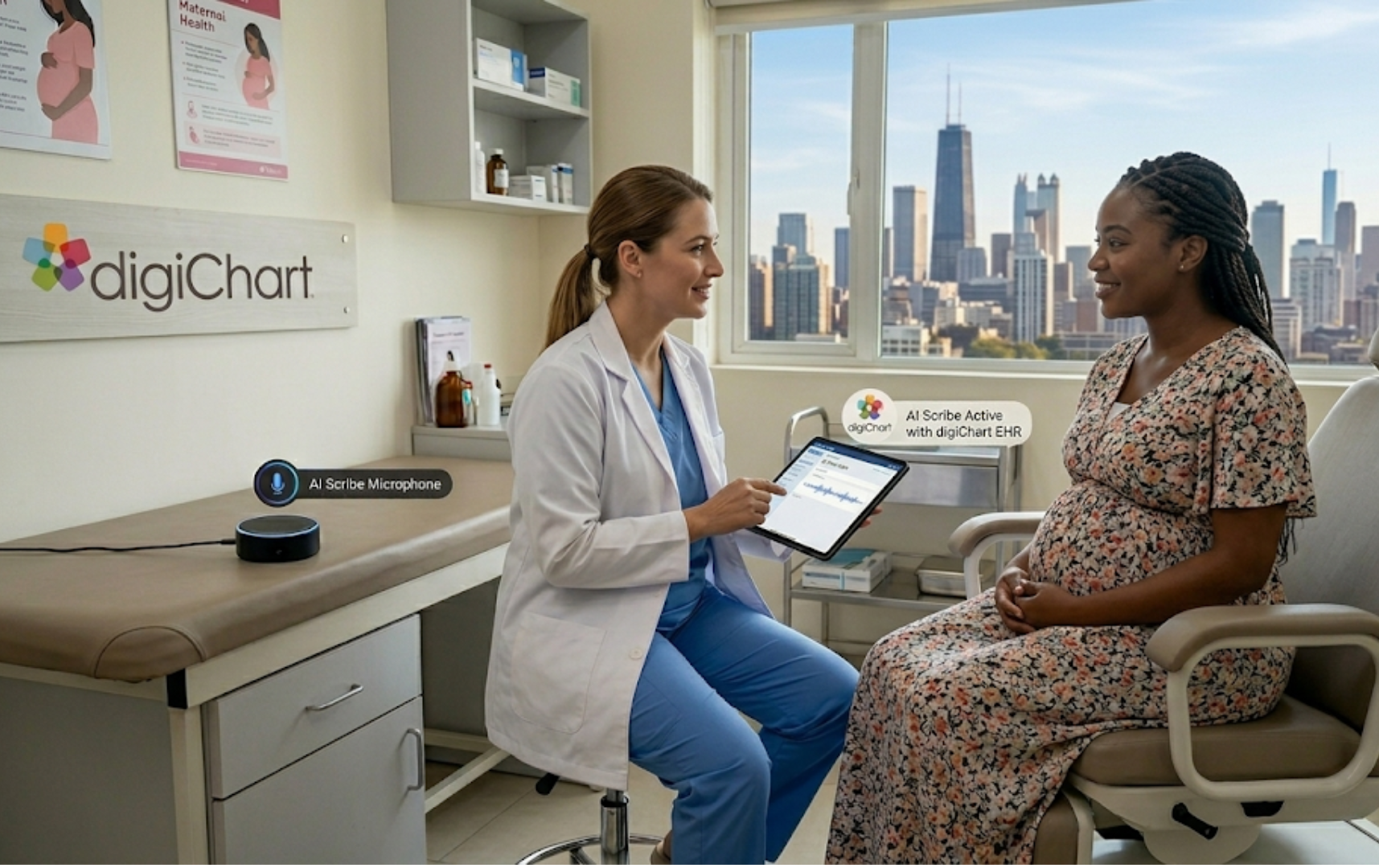
An AI scribe is an advanced digital assistant that uses ambient technology to listen to the natural conversation between you and your patient. Using a combination of speech recognition, Natural Language Processing (NLP), and machine learning, the AI scribe transcribes the visit and intelligently structures the clinically relevant information into a comprehensive SOAP note or other clinical document.
This is not simple dictation software. An ambient AI scribe operates in the background, allowing you to maintain eye contact and engage fully with your patient without the distraction of a keyboard or screen. The technology is designed to understand medical terminology and context, distinguishing between casual conversation and critical clinical data. The result is a drafted note, often ready for your review within minutes of the encounter’s conclusion.
A Day in the Life: Transforming the Ob-Gyn Workflow
Imagine how your day could change with an AI scribe seamlessly integrated into your practice.
Scenario 1: The Annual GYN Exam
You walk into the exam room and greet your patient. As you discuss her health, the AI scribe is silently capturing the history of present illness, review of systems, and your physical exam findings. It automatically drafts a structured SOAP note, allowing you to focus on answering your patient’s questions. This process of automating Ob-Gyn SOAP notes with AI means the chart is nearly complete before you even walk out of the room.
Scenario 2: The High-Risk Prenatal Follow-Up
During a complex visit for a patient with gestational diabetes, you discuss blood sugar logs, fetal movement, and ultrasound results. The AI scribe captures every critical detail with precision. This is essential for AI scribe for high-risk pregnancy documentation, ensuring your notes are thorough for medical-legal purposes and for coordinating care with other specialists.
Scenario 3: The Post-Op Visit
A patient is in for her six-week postpartum check-up after a C-section. The conversation flows naturally as you discuss her recovery, incision healing, and emotional well-being. The AI scribe generates a concise and accurate note, perfect for billing and closing the loop on her surgical care. This efficiency is key to reducing EHR time for Ob-Gyns, giving you more time for direct patient care.
Beyond Time Savings: The Full-Practice Benefits of an AI Scribe
While eliminating “pajama time” is a significant benefit, the impact of AI scribes extends throughout the entire practice.
- Dramatically Reduced Burnout: The most immediate effect is the relief from the cognitive load of documentation, which directly combats a major cause of burnout.
- Enhanced Patient Connection: With less screen time, physicians report better eye contact and more natural, empathetic conversations, which can improve patient satisfaction.
- Improved Note Quality and Accuracy: AI scribes can capture more detail than manual note-taking, reducing the risk of errors or omissions. However, the physician’s final review and approval remains a critical step to ensure accuracy.
- Faster Billing Cycles: Complete and accurate notes generated in real-time lead to faster coding and claim submission, improving the practice’s revenue cycle.
- Increased Practice Revenue: Studies have shown that AI scribe adoption can be associated with a modest increase in weekly visit volume, potentially boosting revenue.
A Checklist: Choosing the Best AI Scribe for Your Ob-Gyn Private Practice
As you explore options, it’s crucial to select a tool that understands the specific needs of your specialty. Here are the must-have features:
Specialty-Specific Vocabulary
The system must be trained on Ob-Gyn terminology. Can it accurately differentiate “fundal height” from “fungal infection” and understand acronyms like “LMP” or “G3P2”?
Seamless EHR Integration
The best solutions don’t just create notes; they place them into the correct sections of your EHR with minimal clicks, eliminating the dreaded copy-and-paste.
Ironclad Security & HIPAA Compliance
Any tool that handles Protected Health Information (PHI) must be fully HIPAA-compliant. This includes signing a Business Associate Agreement (BAA) and using end-to-end data encryption.
Ease of Use & Minimal Training
The technology should be intuitive and fit into your existing workflow without requiring extensive training or technical support.
Customizable Templates
Every physician has a unique style. The AI scribe should allow you to customize the format and structure of the final note to match your preferences.
Your Guide to Getting Started
AI scribes are no longer a futuristic concept but a practical, essential tool for the modern Ob-Gyn practice. This technology offers a clear path to ending the nightly ritual of “pajama time,” reducing burnout, and allowing you to rediscover the joy of focusing on what matters most: your patients.
Ready to see how an AI scribe designed for Ob-Gyns can transform your practice?